


Can I Run My Pool Pump 24/7? What Smart Pool Owners Need to Know Before You Do

Think Your Pool Is Leaking?
The Mini Bucket Test helps you determine whether your pool is leaking or simply losing water to evaporation.
Get Smarter About Your Pool
Practical pool-care tips, leak detection advice, and helpful guides delivered to your inbox.
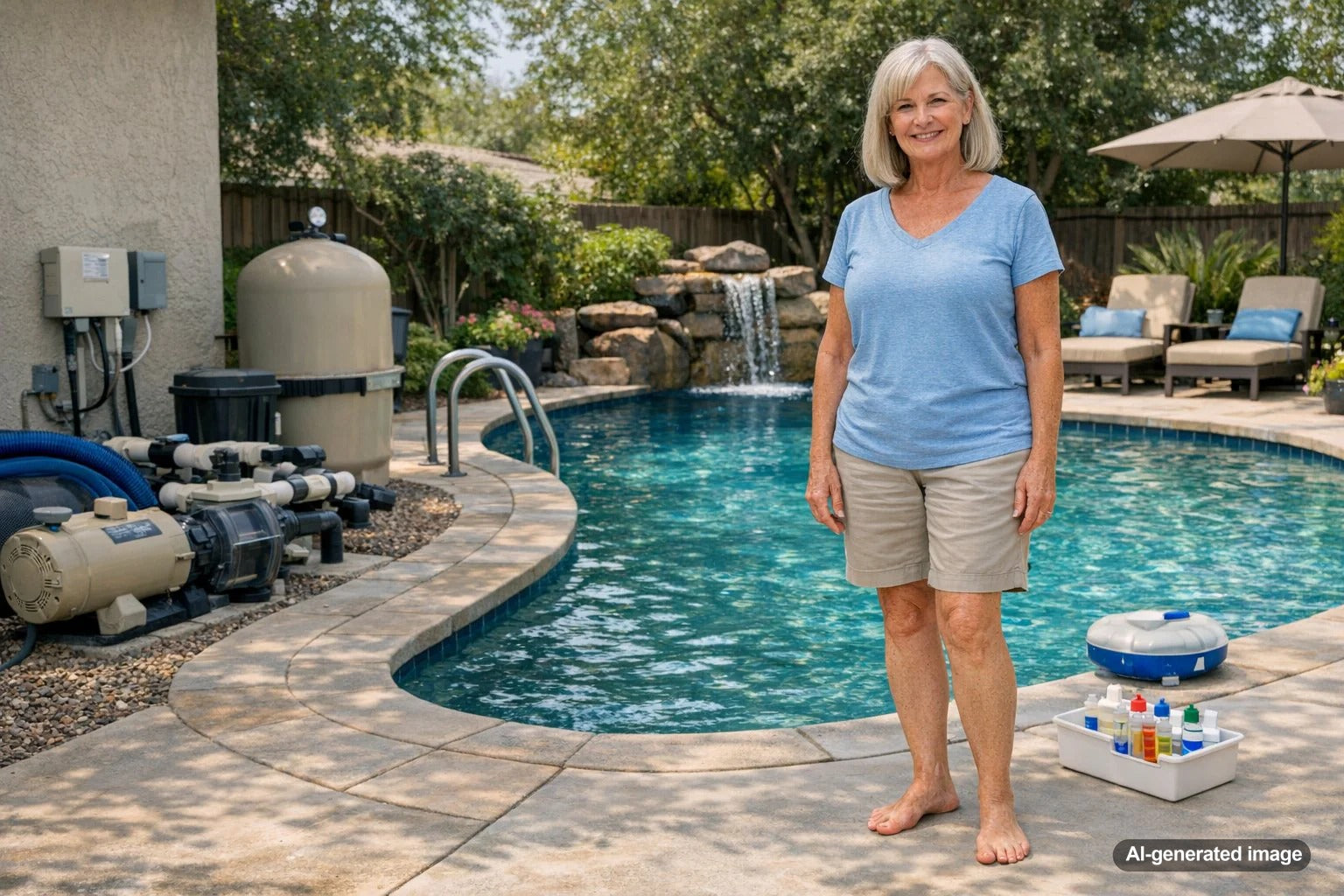
Some of the best pool care habits come from understanding how your equipment actually works, not just following generic advice. One of the most common questions pool owners ask is whether it is safe or smart to run a pool pump 24 hours a day. At first glance, it sounds like more circulation should always mean cleaner water, but the reality is more nuanced and depends on your pool, your equipment, and your goals.
Is It Safe to Run a Pool Pump 24/7?
Yes, in most cases, it is technically safe to run your pool pump continuously. Modern pool pumps are designed to operate for extended periods, and many commercial pools run their systems around the clock. However, just because it is safe does not mean it is necessary or efficient for a residential pool.
The bigger question is not whether you can run your pump 24/7, but whether you should.
What Happens When You Run Your Pump Nonstop?
Running your pump all day and night changes how your pool behaves in a few important ways. Some of these are beneficial, while others can cost you more than you realize.
Benefits of Continuous Pump Operation
- Constant water circulation helps distribute chemicals evenly
- Improved filtration can reduce fine debris buildup
- Less chance of stagnant zones in large or irregularly shaped pools
- More consistent skimming, especially in windy or debris-heavy environments
Drawbacks You Should Not Ignore
- Significantly higher electricity costs, especially with single-speed pumps
- Faster wear on pump components like seals and bearings
- Increased filter loading, which can require more frequent cleaning
- Potential overheating in older or poorly ventilated equipment setups
For many homeowners, the energy cost alone is enough reason to rethink a 24/7 schedule.
How Long Should You Actually Run Your Pool Pump?
A more practical approach is to run your pump long enough to turn over your pool water at least once per day. For most residential pools, that typically falls between 6 and 12 hours, depending on size and pump efficiency.
However, this is not a one-size-fits-all rule. Several factors can shift that ideal runtime:
- Pool size: Larger pools require longer circulation to move the same volume of water
- Climate: Hot climates increase algae risk and may require longer run times
- Debris load: Pools near trees or in windy areas benefit from extended skimming
- Usage: Heavy swimmer activity introduces oils, sunscreen, and contaminants
- Equipment type: Variable-speed pumps can run longer at lower cost
Many pool owners find that splitting runtime into two cycles, such as morning and evening, improves circulation without running the pump nonstop.
When Running 24/7 Might Make Sense
There are specific situations where continuous operation is actually helpful or even recommended:
- During algae treatment or shock dosing
- When clearing cloudy water after a storm
- In pools with attached spas or water features that rely on circulation
- When using certain saltwater or chemical automation systems
Even in these cases, the 24/7 schedule is usually temporary rather than a permanent setup.
What Pool Owners Often Miss About Pump Runtime
One overlooked detail is that more runtime does not always equal better filtration. Water moves through your filter at a specific rate, and pushing it continuously does not necessarily improve clarity beyond a certain point.
Another subtle factor is evaporation. A pump running nonstop increases surface agitation, especially if returns are angled upward or water features are active. That extra movement can slightly increase evaporation, which some homeowners mistake for a leak.
Pool Owner Tip: If your pool seems to lose water faster when your pump runs longer hours, it may not be a leak at all. Increased circulation and surface movement can accelerate evaporation, especially in hot or windy conditions.
If you are unsure whether the water loss is normal, a simple tool like the Mini Bucket Test can help you compare evaporation against possible leak-related loss and decide whether further investigation is needed.
Single-Speed vs Variable-Speed Pumps
Your pump type plays a huge role in whether 24/7 operation is practical.
Single-Speed Pumps
These run at full power all the time, which makes continuous operation expensive. Running one 24/7 can significantly increase your monthly energy bill.
Variable-Speed Pumps
These are designed for longer runtimes at lower speeds. Many pool owners run them nearly all day, but at reduced power levels, which maintains circulation while keeping energy costs manageable.
If you are considering extended pump hours, upgrading to a variable-speed model can make a noticeable difference in both performance and cost.
Common Mistakes Pool Owners Make
- Assuming longer runtime automatically fixes cloudy water
- Ignoring filter maintenance while increasing pump hours
- Running the pump overnight without checking noise or vibration issues
- Overlooking how water features impact evaporation and water loss
Often, water clarity issues are tied more to chemistry imbalance or filtration problems than pump runtime alone.
Finding the Right Balance for Your Pool
The goal is not maximum runtime. It is efficient, consistent circulation that supports clean, balanced water without unnecessary wear or cost.
Start with a moderate schedule, observe how your pool responds, and adjust gradually. Pay attention to clarity, debris buildup, and water level changes. These signals will tell you more than any generic recommendation.
Bottom Line: You can run your pool pump 24/7, but most homeowners do not need to. A well-balanced schedule tailored to your pool conditions will keep your water clean while saving energy and extending the life of your equipment.