


Why Is My Dog Drinking Pool Water? Hidden Reasons, Risks, and What Every Pool Owner Should Know

Think Your Pool Is Leaking?
The Mini Bucket Test helps you determine whether your pool is leaking or simply losing water to evaporation.
Get Smarter About Your Pool
Practical pool-care tips, leak detection advice, and helpful guides delivered to your inbox.
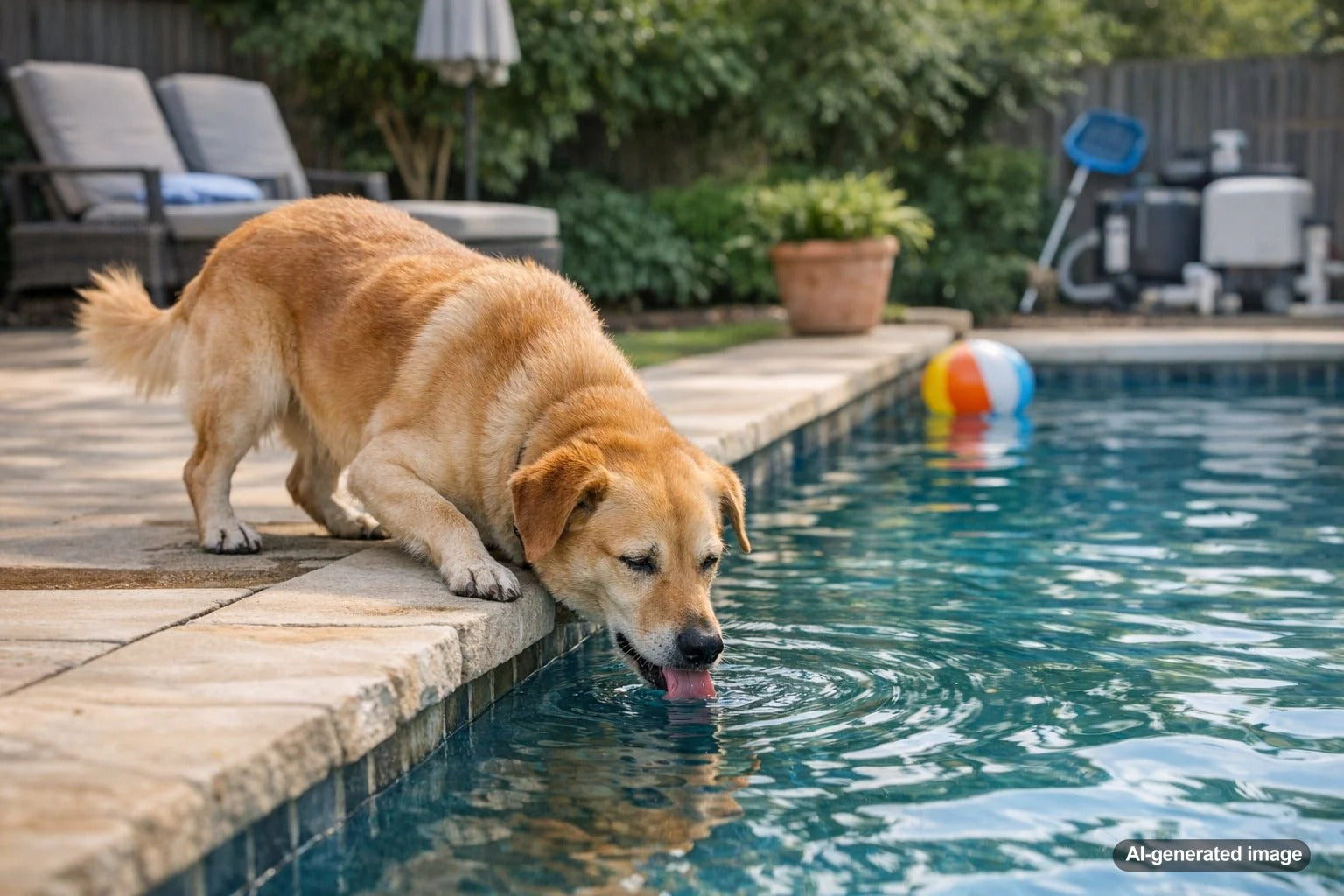
Here’s a simple truth... if your dog keeps heading straight for your pool instead of their water bowl, it is not random behavior. Dogs are drawn to pool water for a mix of instinct, curiosity, and sometimes even subtle signals in your pool environment that most owners overlook. While it might seem harmless at first glance, repeated pool drinking can point to underlying issues with hydration, water chemistry, or even pool maintenance patterns.
Understanding why this happens is not just about protecting your pet. It also gives you insight into your pool’s condition and how your backyard environment is functioning as a whole.
Why Dogs Are Attracted to Pool Water
Dogs do not evaluate water the way humans do. What looks like a chemically treated pool to you may smell and taste completely different to them.
Several factors can make pool water appealing:
- Temperature: Pool water is often cooler than standing water in a bowl, especially in warm weather.
- Movement: Ripples, splashing, and circulation can attract dogs who associate movement with freshness.
- Curiosity and habit: If your dog spends time swimming, drinking may simply become part of the routine.
- Location convenience: If the pool is closer than their bowl, they will often choose the easiest option.
There is also a surprising detail many pool owners miss. Chlorinated water can have a faint salty or mineral-like taste depending on your chemistry balance. Some dogs actually prefer that flavor profile over plain water.
Is It Safe for Dogs to Drink Pool Water?
In small amounts, most properly balanced pool water is unlikely to cause serious harm. But repeated drinking is where problems begin to develop.
Potential concerns include:
- Stomach irritation from chlorine or sanitizers
- Diarrhea or vomiting after repeated ingestion
- Electrolyte imbalance if large amounts are consumed
- Exposure to algae treatments or shock chemicals
The risk increases significantly right after chemical adjustments. For example, freshly shocked pools or recently treated algae outbreaks can introduce stronger chemical levels that are not safe for pets to ingest.
Warning for Pool Owners: If your dog drinks pool water immediately after you add chemicals or shock the pool, it can lead to more severe reactions than normal exposure. Always limit access during these periods.
What Your Dog’s Behavior Might Be Telling You
Sometimes, pool drinking is less about preference and more about a signal.
Here are a few patterns that experienced pool owners and pet owners often notice:
1. Their Water Bowl Is Not Appealing
Dogs are sensitive to stale water. A bowl that sits too long, collects debris, or warms up in the sun can quickly become undesirable.
2. Subtle Changes in Pool Chemistry
If your dog suddenly becomes more interested in pool water than usual, it can coincide with shifts in your pool’s chemical balance. Slight increases in salt levels, stabilizer, or even dissolved solids can change taste in ways that attract animals.
3. Increased Thirst
If your dog is drinking excessively from any source, including the pool, it could point to dehydration, heat exposure, or an underlying health issue. This is worth monitoring closely.
4. Behavioral Conditioning
Dogs learn quickly. If they have been allowed to drink from the pool repeatedly, it becomes normalized behavior that is harder to break over time.
Pool-Specific Factors That Make a Difference
Not all pools are the same, and certain features can influence how likely a dog is to drink from them.
- Saltwater pools: These often taste more appealing to dogs due to the mild salinity.
- Water features: Spillovers, fountains, and tanning ledges create moving water that attracts attention.
- Screen enclosures: These can trap heat, making pool water cooler by comparison and more appealing.
- Vinyl vs plaster: Surface materials can slightly affect water temperature and feel, which may influence behavior.
Even small differences like shaded areas or wind exposure can impact water temperature and evaporation, indirectly affecting how your dog interacts with the pool.
How to Stop Your Dog From Drinking Pool Water
Changing this behavior usually comes down to making the alternative more appealing and limiting access at key times.
- Provide fresh, cool water in multiple locations
- Clean and refill water bowls frequently
- Use shaded bowls to keep water temperature lower
- Redirect behavior consistently when they approach the pool to drink
- Limit unsupervised access during peak chemical activity
Some owners also find success placing a water source near the pool area so the dog has a convenient alternative without forming the habit of drinking directly from the pool.
What Pool Owners Often Miss
One overlooked connection is how water loss and refill cycles can subtly influence water taste and chemistry.
If your pool is losing water faster than expected and being topped off frequently, it can lead to fluctuations in chemical balance. Those changes may not always be obvious visually, but they can affect how the water smells or tastes to your dog.
If your dog’s behavior seems to change alongside unexplained water level drops, it may be worth taking a closer look. A simple tool like the Mini Bucket Test can help you compare normal evaporation against possible leak-related water loss. It is a straightforward way to see whether your pool is behaving as expected before considering more advanced inspection.
When to Be Concerned
Occasional sipping is one thing. Consistent or excessive drinking is another.
Watch for these signs:
- Frequent drinking followed by vomiting or diarrhea
- Lethargy after pool exposure
- Sudden increase in overall water intake
- Reluctance to drink clean water but preference for pool water
If you notice these patterns, it is worth consulting a veterinarian while also reviewing your pool’s chemical levels and recent maintenance activity.
Bottom Line: Dogs drink pool water for a mix of instinct, convenience, and environmental cues. While small amounts are usually not dangerous, repeated behavior can signal issues with hydration, pool chemistry, or maintenance patterns. Paying attention to both your dog and your pool can help you catch small problems before they turn into bigger ones.
By treating your dog’s behavior as useful feedback rather than a nuisance, you gain a better understanding of your entire pool environment. That insight is what separates reactive pool care from truly confident ownership.