


What Every Pool Owner Should Have In Their Shed for Stress-Free Maintenance, Faster Fixes, and Year-Round Peace of Mind

Think Your Pool Is Leaking?
The Mini Bucket Test helps you determine whether your pool is leaking or simply losing water to evaporation.
Get Smarter About Your Pool
Practical pool-care tips, leak detection advice, and helpful guides delivered to your inbox.
The power of simple, well-prepared tools often separates a smooth pool season from one filled with frustration. What Every Pool Owner Should Have In Their Shed is not just about convenience, it is about preventing problems before they start and responding quickly when something feels off. Whether you are managing a backyard pool for the first time or maintaining one year after year, having the right essentials within arm's reach can save time, money, and stress.
The Core Cleaning Tools You Will Use Every Week
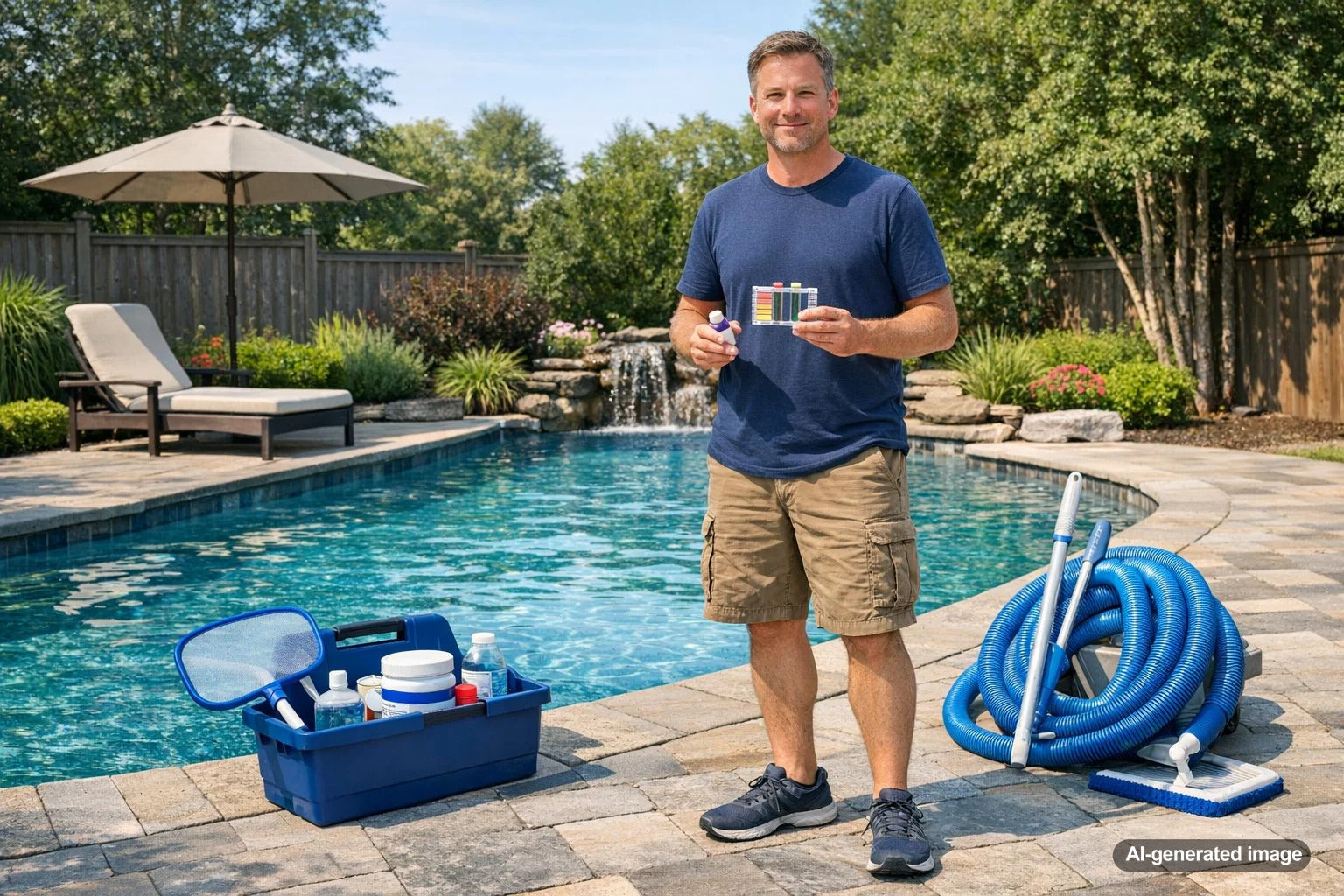
Every pool owner quickly learns that consistent cleaning is what keeps water clear and equipment running efficiently. Your shed should always include a sturdy telescopic pole, a quality leaf net, and a reliable pool brush suited to your surface type. Plaster pools benefit from firm bristles, while vinyl liners require softer brushes to avoid damage.
A vacuum system, whether manual or automatic, is another must-have. Debris that settles on the floor does more than look bad. It can stain surfaces and increase chemical demand. One overlooked detail is keeping spare vacuum hoses or connectors. Small cracks or air leaks in hoses can reduce suction and make cleaning far less effective.
Water Testing and Chemical Control Essentials
Clean water is not just about appearance. It is about balance. Your shed should always include a dependable test kit or digital tester. Strips are convenient, but liquid kits often provide more precise readings when troubleshooting recurring issues.
Keep core chemicals organized and clearly labeled:
- Chlorine or sanitizer
- pH increaser and reducer
- Alkalinity adjuster
- Shock treatment
- Algaecide for prevention
One detail many pool owners overlook is storage conditions. Heat and humidity can degrade chemicals faster than expected, especially chlorine. A shaded, dry section of your shed helps maintain their effectiveness.
Quick-Fix Tools for Small Problems
Not every issue requires a service call. Some of the most useful items in your shed are the ones that help you act fast when something small goes wrong. A basic repair kit for your pool type can handle minor tears in vinyl liners or small surface cracks in plaster before they worsen.
Include items like:
- Pool-safe sealant or patch kits
- O-ring lubricants for pump lids and fittings
- Replacement gaskets for common equipment connections
- Teflon tape for quick plumbing fixes
Many leaks and suction issues start at connection points rather than visible structural damage. Having these small items ready can prevent a minor issue from turning into a costly repair.
Pool Owner Tip: If you are troubleshooting multiple issues and the water level seems to be dropping faster than usual, it can be hard to tell whether you are dealing with normal evaporation or something more serious. A simple tool like the Mini Bucket Test can help you compare typical evaporation against possible leak-related water loss. It is a quick first step that may help you decide whether further investigation is needed.
Seasonal Tools That Make a Big Difference
Your shed should also reflect the changing demands of the seasons. In warmer months, sunscreen oils, pollen, and increased usage can strain your filtration system. Keeping spare filter cartridges or DE powder on hand allows you to maintain proper flow without delay.
During cooler months or off-season periods, items like a pool cover pump and cover cleaner become essential. Standing water on covers not only adds weight but can introduce debris and contaminants when removed.
Another commonly missed detail is having winterizing plugs and antifreeze ready before temperatures drop. Waiting until the first cold snap often leads to rushed preparation and avoidable mistakes.
What Pool Owners Often Miss
Many sheds are stocked with the basics but still lack a few key items that make ownership easier. These are often the tools that help you diagnose subtle problems before they become obvious.
- A water level marker or simple measuring tool to track changes over time
- A dedicated bucket for testing evaporation or mixing chemicals
- Spare skimmer baskets to swap out quickly when cleaning
- A flashlight for inspecting equipment areas and hard-to-see leaks
Tracking small changes, especially water level shifts, can reveal patterns. For example, a pool losing more water overnight than during the day may point toward a plumbing or suction-side issue rather than evaporation.
When Organization Becomes the Real Advantage
It is not just what you have, but how you store it. A cluttered shed leads to missed maintenance and delayed fixes. Group tools by function, cleaning, chemistry, and repairs, so you can respond quickly when needed.
Clear bins or labeled shelves make a noticeable difference. Pool care is often about timing. Testing water a day late or skipping a cleaning cycle can create a chain reaction that takes much longer to correct.
Bottom Line: A well-stocked pool shed is more than a convenience. It is a practical system that helps you stay ahead of problems, maintain water quality, and respond quickly when something changes. The right tools, combined with consistent habits, make pool ownership far more manageable and far more enjoyable.