


What Is a Tanning Ledge (Baja Shelf)? A Smart Pool Feature That Changes How You Relax, Cool Off, and Enjoy Your Backyard

Think Your Pool Is Leaking?
The Mini Bucket Test helps you determine whether your pool is leaking or simply losing water to evaporation.
Get Smarter About Your Pool
Practical pool-care tips, leak detection advice, and helpful guides delivered to your inbox.
This is for you if you have ever looked at a pool and wondered about that shallow, sunlit area where chairs sit in the water and kids splash safely. What Is a Tanning Ledge (Baja Shelf)? It is more than just a design trend. It is a functional, versatile pool feature that changes how people use their pool day to day, from relaxing in the sun to giving pets and kids a safer place to enter the water.
What Exactly Is a Tanning Ledge?
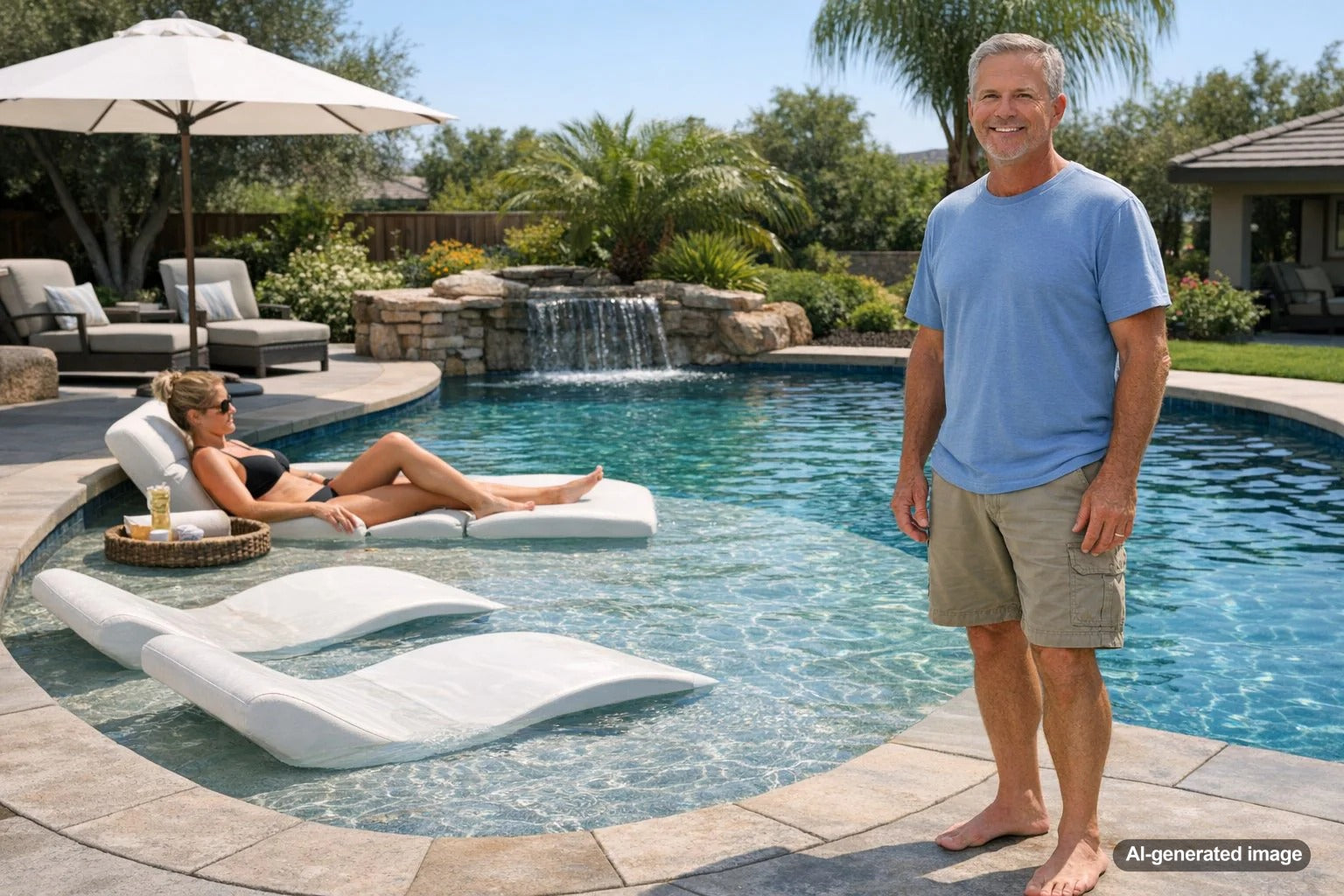
A tanning ledge, also called a Baja shelf, is a wide, flat, shallow section of a swimming pool. It is typically built at the entry area and is only a few inches to about 12 inches deep. That shallow depth is what makes it so useful. It allows you to sit, lounge, or place furniture partially submerged in water.
Unlike traditional steps, a tanning ledge extends out horizontally, creating a platform rather than just a way to get in and out of the pool. You will often see it paired with:
- In-pool lounge chairs
- Umbrellas anchored into sleeves
- Water features like bubblers
- Wide entry access for easier movement
Why Homeowners Love Baja Shelves
The appeal of a tanning ledge goes beyond looks. It adds a completely different way to use your pool. Many homeowners find they spend more time on the ledge than in the deeper areas.
Here are a few reasons why:
1. Comfort Without Full Immersion
You can stay cool without fully swimming. This is ideal for people who want to relax, read, or socialize without being fully submerged.
2. A Safer Space for Kids and Pets
Shallow depth makes it a natural play zone. Kids can sit and splash, and dogs often use it as a comfortable entry point without jumping into deeper water.
3. Easier Pool Entry
Compared to steep steps or ladders, a Baja shelf provides a gradual and more accessible way to enter the pool. This can be especially helpful for older adults or anyone with mobility concerns.
4. Visual Impact
From a design perspective, tanning ledges create a resort-style look. When paired with light-colored finishes, they enhance water color and reflect sunlight beautifully.
Common Design Variations You Should Know
Not all tanning ledges are the same. Small differences in design can affect how practical and enjoyable they are.
Here are a few variations that matter:
- Depth differences: A 6-inch ledge is great for lounging, while a 10-12 inch ledge is better for sitting upright or accommodating larger users.
- Size and width: Some ledges are just large enough for two chairs, while others span the entire width of the pool.
- Integrated steps: Some designs blend steps into the ledge, while others keep them separate for a cleaner look.
- Water features: Bubblers or small fountains are often added, but they can slightly increase evaporation and splash-out.
What Pool Owners Often Miss About Tanning Ledges
Subtle but important details can affect long-term use:
- Shallow water heats up faster, especially in full sun. In hot climates, the ledge can become noticeably warmer than the main pool.
- Debris tends to settle on flat surfaces. Leaves, dirt, and sunscreen residue may collect more on the ledge than in deeper water.
- Circulation can be weaker in this area if not designed correctly, which can lead to uneven chemical distribution.
These are not dealbreakers, but they are things many homeowners do not realize until after installation.
Does a Tanning Ledge Affect Water Levels?
This is where things get a little more technical. Because tanning ledges are shallow and exposed, they can slightly change how water behaves in your pool.
Here are a few ways:
- Increased surface area means more exposure to sun and air
- Water features on the ledge can increase splash-out
- Shallow water warms faster, which can increase evaporation rates
These factors do not mean your pool will lose water excessively, but they can make normal evaporation more noticeable, especially during hot or windy weather.
If your pool includes a tanning ledge and you start noticing the water level dropping faster than expected, it can be helpful to rule out whether it is simply evaporation or something else.
A simple tool like the Mini Bucket Test can help you compare normal evaporation to possible leak-related water loss. It does not diagnose the exact issue, but it can give you a clearer starting point before deciding if further inspection is needed.
Maintenance Considerations for Baja Shelves
Tanning ledges are easy to enjoy, but they do require slightly different care than the rest of the pool.
- Brushing: Flat surfaces should be brushed regularly to prevent buildup of algae or sunscreen residue.
- Circulation checks: Make sure return jets are positioned to move water across the ledge.
- Furniture impact: In-pool chairs can trap debris underneath and may need to be moved occasionally for cleaning.
- Water chemistry: Shallow zones can experience faster chemical fluctuation due to heat and sunlight exposure.
Is a Tanning Ledge Worth It?
For many homeowners, the answer is yes. It adds comfort, usability, and visual appeal all in one feature. However, it works best when it fits how you actually plan to use your pool.
If you want a space for lounging, socializing, or giving kids a safer place to play, it is one of the most versatile additions you can make. If your focus is strictly swimming or exercise, it may be less essential.
Bottom line: A tanning ledge is a shallow, multi-use area that enhances both relaxation and functionality. It changes how people interact with their pool, but it also comes with small maintenance and water behavior considerations that are worth understanding upfront.
For pool owners thinking long-term, features like this are not just about aesthetics. They influence maintenance routines, water behavior, and overall pool use more than most people expect.